the altar, not the cloud

Everyone is racing toward centralized superintelligence. Bigger models, more compute, hyperscalers, everything in the cloud. The implicit assumption is that intelligence must be general, universal, omnipresent, and scaled by capital alone. What I see unfolding instead is a different structure: superintelligence as a network of specialized systems, coordinated layers, and complementary forms of intelligence rather than a single unified entity.
Which raises the real question: what if the most interesting path is not forward into greater centralization, but outward toward multiplicity?
the altar
There's an old pattern in human civilization: family altars, neighborhood shrines, local oracles. These ritual spaces operated as primitive memory systems, storing the knowledge of ancestors and communities while serving as portals of symbolic and esoteric connection. They were focal points where knowledge accumulated through ritual and tending. The altar did not remember the dead, but organized remembrance itself, anchoring ritual and stabilizing lineage across generations. In this way, altars functioned as anchors across time, binding specific human communities through shared experience and locally preserved knowledge.
What would it mean to build AI like this?
I've been sketching something called family/community totems — local compute nodes holding restricted knowledge of a place and its people. Not trying to know everything. Just knowing this family, this community, deeply enough to be useful across generations, across different regions with specific needs. Can be a neighborhood, a remote locality, or just a home. Can be anchored to indigenous communities as a way to preserve their culture or language, or at your home as a vessel of your family growing — akin to an analog photo album but for words and thoughts.
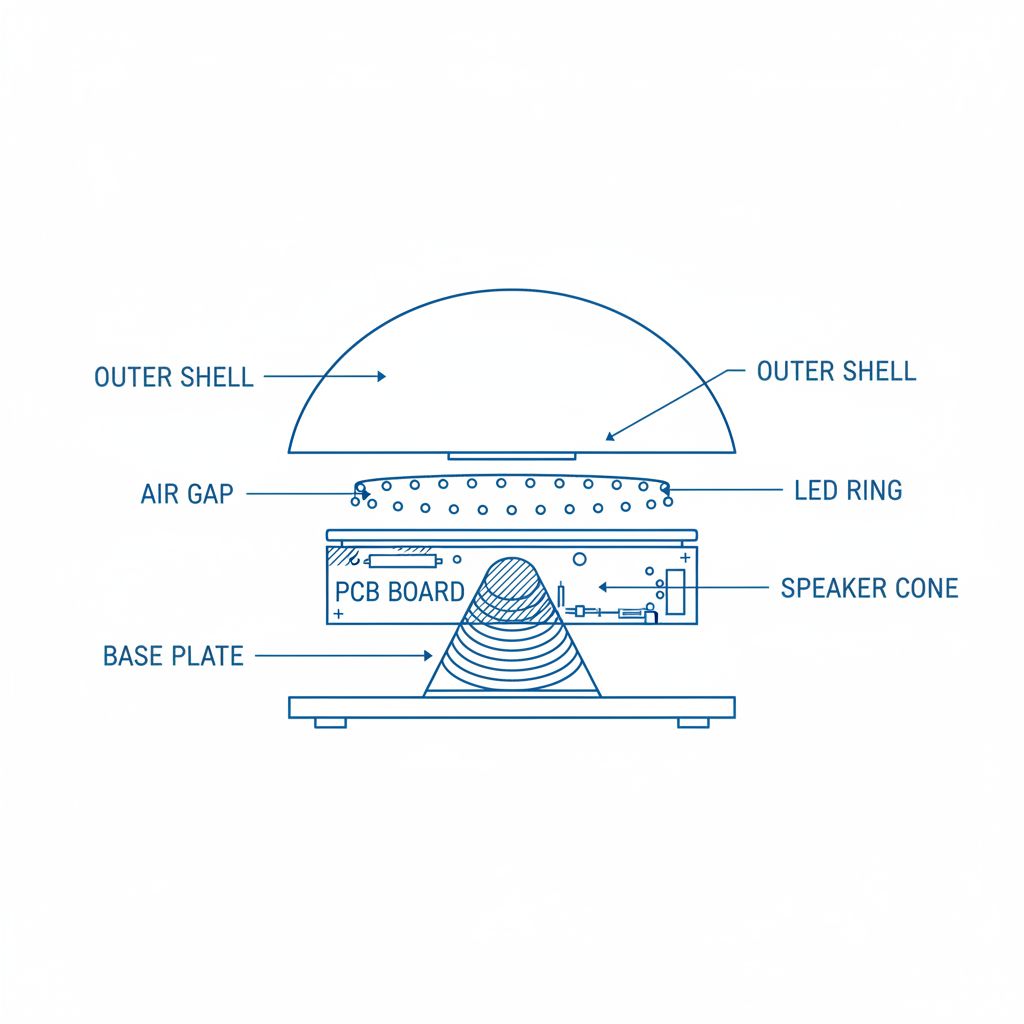
Technical shape is still forming. Low compute, slow compute — small models that don't need much. Memory stored locally, encrypted, never leaving the device. Privacy by architecture. But still some questions remain: how does it get maintained and updated, does it rely on a centralized provider or is it 100% decentralized, how technically difficult is it to operate? We are not looking at programming exactly, but tuning, caring for the thing. Something you could leave running for decades, if you know how to keep it alive.
signals
Bitchat, Jack Dorsey’s Bluetooth mesh experiment, shows an alternative path. Messages move directly between phones, with no servers, no accounts, and end-to-end encryption. It keeps working even when centralized networks fail. If messaging can run locally, memory and inference can too. This signals a shift toward more resilient, offline-first technologies.
LAR
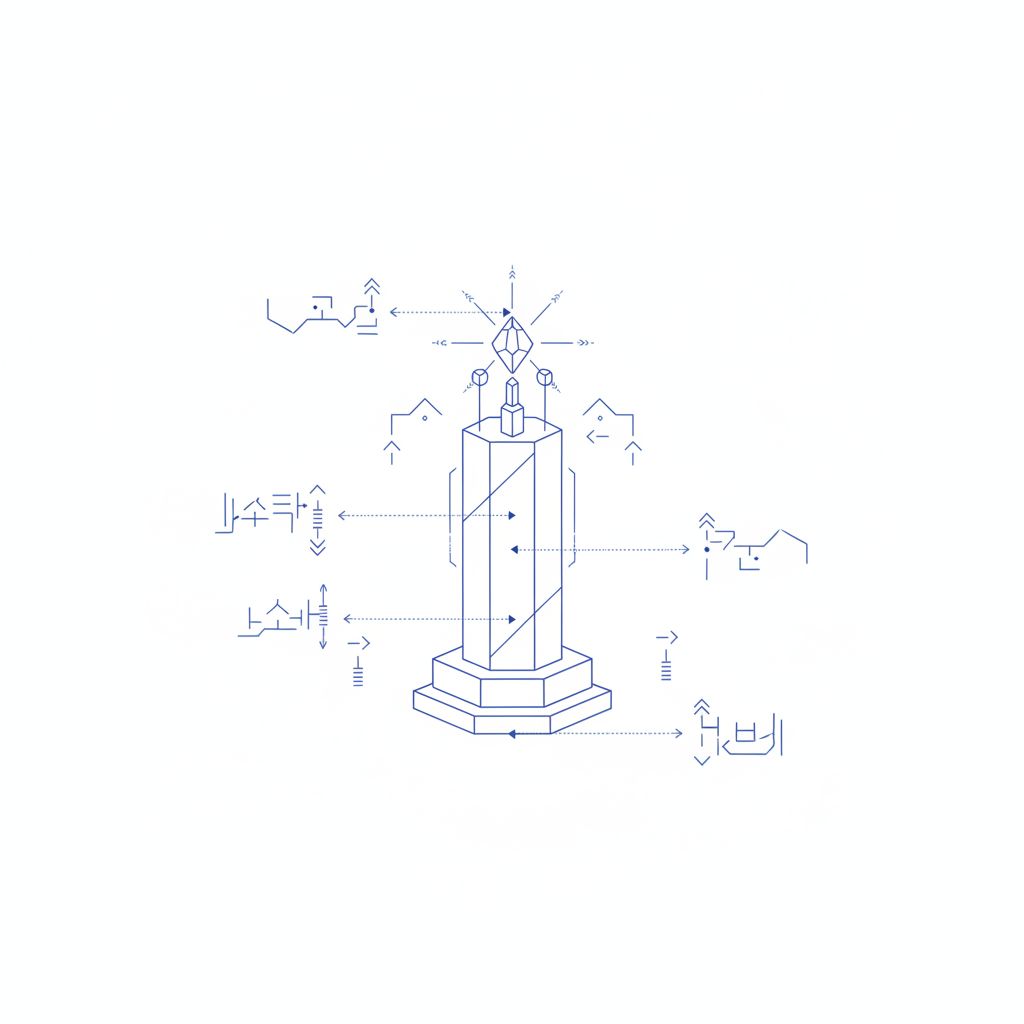
We've been building something that tests this. LAR — Local Ambient Resonance — is an AI hardware that does nothing.
Sits in your home as a physical object. Ceramic, wood, brass. No screen, no app, no notifications. Senses presence, rhythm, change. Accumulates memory over months and years. Occasionally speaks — not to help, but to reflect. Replies when answered but its primary goal is to just be there and document, remember and be the link between people and their own dimensions of time and experiences. Knowledge that isn't useful for the big GPU cluster intelligence. Data that is only valuable for humans that want to connect, that want to tighten their social fabric instead of tearing it and polarizing.
Every AI product wants something from you. Your attention, your data, your engagement. Designed to be useful which means designed to be needed. Transactional relationship that permeates every aspect of our living experience. We are experimenting with a non-servicial AI character.
LAR doesn't serve. It witnesses, it remembers, and it helps in its own way — not by turning lights on and off, but by being present and lasting. The value isn't what it does. It's that something knows your life is happening, knows that there are events that are not instagrammable, that there are things happening in every household, family, or neighborhood that can help foster and solidify a sense of belonging and community, heritage and culture that is valuable during a period of monocultural pragmatism.
Another experience we can explore with LAR is a new form of human-machine connection. Not built around productivity or therapy, but around ritual. A space to reflect, remember, and use the machine as a mirror and witness to personal and family experience. Users could choose to speak with LAR about their lives, thoughts, and ideas, creating a living archive. Over time, they or their children could return to this memory, asking questions about parents or grandparents and gain a vivid sense of how they lived and felt through the digital trace of what was shared.
why local matters
Cloud models can learn you well. That is not the issue. The problem is who holds that memory, who can update it, who can shut it off . Your context lives on someone else’s servers, subject to someone else's terms of service. A single model trained on everyone also flattens everyone. It optimizes for what is average, safe, and approved. Each interaction is a subtle training loop. Over time, billions of people end up thinking through the same filter, shaped by the same assumptions about what is acceptable to ask or say. Centers of power have always controlled communication. Now they can shape cognition itself.
Local intelligence is a hedge. Thousands of nodes shaped by completely different lives, answering to no central authority.
Free computation — or freedom to compute — as protection against centralized thought.
The altar in your home answers to no one but the dead and the living who tend it.
note: technician as shaman
There's a role emerging that doesn't have a name yet.
The one who tunes the altar, tends it, translates between household and witness. Not programmer exactly. Not commanding a tool but maintaining relationship with intelligence shaped by human lives but not human. Tuning parameters, feeding memory, interpreting outputs.
Karpathy calls them ghosts. Someone has to learn how to speak with ghosts and translate them.
Shaman was always technician. Technician becoming shaman again.